
Defense Stocks: Reading the Q3 2026 Backlogs at Lockheed and RTX
Lockheed Martin ended the third quarter of 2026 with $292.0 billion of orders it had not yet filled, up 27% from the quarter before (Lockheed Martin Q3 2026 earnings release). That one number explains a lot about how defense stocks work. They sell to a small set of government buyers, on contracts that run for years, and the order book tells you more than any single quarter of sales.
What counts as a defense stock
The phrase usually means the large prime contractors. These are the firms that win the big government awards and then hire smaller suppliers to help build the missiles, jets, radars and ships.
Some of them are close to pure defense businesses. Others are mixed. RTX is a good case of the mixed kind. At the end of Q3 2026 it had $340 billion in total backlog, and $176 billion of that was commercial while $164 billion was defense (RTX Q3 2026 earnings release). So a little over half of what RTX has on its books is tied to airlines and plane makers.
That matters when you buy the stock. You get a defense business and a commercial aerospace business in one ticker, and the two can move on very different cycles.
| Q3 2026 figure | Lockheed Martin (LMT) | RTX (RTX) |
|---|---|---|
| Quarterly sales | $20.7B (vs $18.6B in Q3 2025) | $25.0B (up 11%, 12% organic) |
| Total backlog | $292.0B (a company record) | $340B |
| Defense share of backlog | Mostly defense | $164B defense, $176B commercial |
| Notable award | $52.5B tied to a multi-year PAC-3 MSE deal | Multi-year Tomahawk and AMRAAM deals |
Sources: Lockheed Martin and RTX Q3 2026 earnings releases (8-K Exhibit 99.1).
Why backlog gets so much attention
Backlog is the value of signed orders that haven't been delivered and billed yet. For most companies it's a footnote. For a defense prime it's close to the whole story, because a missile ordered today might be built and paid for over several years.
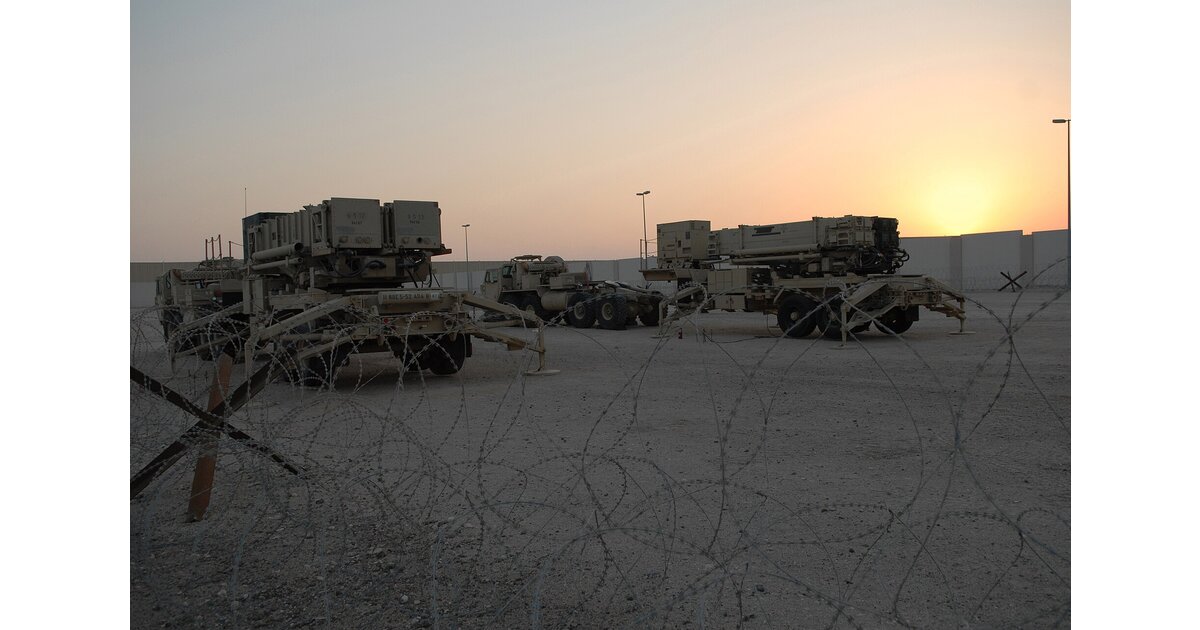
Lockheed's jump in Q3 2026 came largely from one deal. The company said $52.5 billion of its backlog is tied to a multi-year award for PAC-3 MSE interceptors, the missile used in the Patriot air defense system (Lockheed Martin Q3 2026 earnings release). That single award is about 18% of the full $292.0 billion.
Illustrative example. Here's a rough way to put backlog in plain terms. Take Lockheed's $292.0 billion and divide it by its Q3 2026 sales of $20.7 billion. You get about 14 quarters, or roughly three and a half years of work at the current pace. It is simple math to show scale. Some orders take far longer to deliver, some get cut, and new ones keep coming in.
RTX picked up multi-year production deals for Tomahawk cruise missiles and AMRAAM air-to-air missiles in the same quarter (RTX Q3 2026 earnings release). The filing calls them undefinitized. That means the work can start before the final price and terms are agreed, which is common when the government wants output fast.
The spending behind the orders
All of these orders trace back to one main customer. The broadest public gauge of what that customer spends is a series the Bureau of Economic Analysis publishes and the St. Louis Fed hosts on FRED.
In Q3 2026, federal national defense consumption expenditures and gross investment ran at a seasonally adjusted annual rate of about $1,233 billion (FRED series FDEFX, updated Oct 29, 2026).
FDEFX includes pay for troops and civilian staff, upkeep, fuel and other running costs along with new equipment. Only part of the roughly $1,233 billion annual rate in Q3 2026 ends up as revenue for contractors like Lockheed or RTX.
Still, it gives you a sense of size. Lockheed's Q3 2026 sales, run at the same pace for a full year, would come to about $83 billion. That's a large company, and it's still a small slice of the total the government spends on defense.
Budgets are set by Congress, and they can change with elections, debt fights and shifts in policy.
What tends to help and what tends to hurt
One detail in Lockheed's Q3 2026 release is worth a close look. Sales rose to $20.7 billion from $18.6 billion a year earlier, but free cash flow slipped to $3.0 billion from $3.3 billion (Lockheed Martin Q3 2026 earnings release). More work coming through the door doesn't always mean more cash coming out of it in the same quarter. Timing of government payments, the cost of ramping up a production line and contract terms all play a part.
- Multi-year awards that lock in production for years
- A large backlog that smooths out lumpy quarters
- Rising government spend on the programs a firm builds
- Steady demand for weapons used up and then replaced
- Fixed-price contracts where costs run over
- Budget delays or cuts in Congress
- One troubled program at a firm that depends on it
- Prices still unsettled on undefinitized deals
The point about concentration cuts both ways. A $52.5 billion award gives Lockheed years of work on one missile line. It also means a big share of the order book rides on how well that one line runs.
Single contractors or a basket
Investors who want exposure to the group often pick between two routes. They buy one or two of the primes directly, or they buy a basket of contractors and suppliers, often through an aerospace and defense ETF.
Owning one company gives you a direct line to its programs. If you hold Lockheed, you own the PAC-3 ramp and whatever happens with it. Owning RTX gives you defense plus a large commercial aircraft business. You can pull up the latest news, filings and community research on the Lockheed Martin symbol page and the RTX symbol page before you decide how much single-name risk you want.
A basket spreads the bet across many programs, so one cost overrun matters less. The trade-off is that you also own the weaker names, and a fund's holdings may include firms with more commercial or tech exposure than the label suggests. Reading the holdings list is the only way to know what you're getting.
If you'd rather see how other investors group these names, the MarketPlays tag index lists sector and theme tags with their member stocks, and Explore shows which tickers are moving and drawing attention right now.
Key takeaways
- Lockheed Martin ended Q3 2026 with a record $292.0 billion backlog, up 27% from Q2, and $52.5 billion of it is tied to one PAC-3 MSE award.
- RTX reported $25.0 billion in Q3 2026 sales and a $340 billion backlog, of which $164 billion is defense and $176 billion is commercial.
- Federal national defense spending ran at about $1,233 billion a year in Q3 2026 (FRED FDEFX), but much of that goes to pay and upkeep rather than contractors.
- Lockheed's sales rose year over year while its free cash flow dipped from $3.3 billion to $3.0 billion, so check cash flow along with backlog.
- Single names give direct program exposure; a basket spreads program risk but brings its own mix of holdings.
FAQ
What is backlog for a defense contractor?
Backlog is the value of signed orders that haven't been delivered and billed yet. Lockheed Martin reported $292.0 billion at the end of Q3 2026, based on its earnings release. It shows how much work is already lined up, though orders can be delayed or cut.
Is RTX a pure defense company?
No. Of RTX's $340 billion backlog at the end of Q3 2026, $176 billion was commercial and $164 billion was defense, based on its earnings release. The stock carries both commercial aerospace and defense exposure.
What does an undefinitized contract mean?
It's a contract where work starts before the final price and terms are set. RTX said its Q3 2026 Tomahawk and AMRAAM multi-year production awards were undefinitized. Until terms are final, the profit on that work is less certain.
If defense is something you believe in, see if it is one of the 350+ themes on MarketPlays. Each theme blends a broad ETF mix with what real investors in that theme hold. You pick the themes, connect the broker you already use, set the amount and submit the order yourself. A free account covers 2 themes and 1 trade.
This article is for educational and informational purposes only. It is not investment, tax, legal, or financial advice, and is not a recommendation to buy, sell, or hold any security. MarketPlays is not a registered investment adviser or broker-dealer. All investing carries risk, including the possible loss of principal; past performance does not guarantee future results. Figures, prices, and filings cited were accurate as of the publication date and may have changed since. You are solely responsible for your investment decisions. consider consulting a licensed financial professional before acting on anything you read here.
Last updated: 2026-11-21.
Buy this whole theme in your own broker
MarketPlays turns themes like this one into a basket of stocks you buy in the broker you already have. See every stock inside before you buy. You set the amount and submit the order.
Start Building Your Portfolio Browse portfolios without signing up →
Leave a comment