
Copper ETF: Miners vs. Futures Funds, and What You Own
Copper averaged about $14,473 per metric ton in September 2026, based on IMF benchmark data published by FRED. Search for a copper ETF after reading a number like that and you get two kinds of funds that share a label and hold very different things. One kind owns shares of mining companies. The other owns copper futures contracts.
The two can move apart for months at a time, and the reasons are written in plain sight in each fund's filings. This post walks through both structures using two well-known examples: the Global X Copper Miners ETF (COPX) and the United States Copper Index Fund (CPER).
Two kinds of copper funds
Nobody ships copper cathode to a fund's warehouse on your behalf. Neither of the funds covered here holds the metal itself, so each one uses a stand-in.
COPX uses mining stocks. Its summary prospectus says the fund "invests at least 80% of its total assets in the securities of the Solactive Global Copper Miners Total Return Index" (Global X summary prospectus, dated March 1, 2026).
CPER uses futures. Its SEC filing says the fund "seeks to achieve its investment objective by investing to the fullest extent possible in the Benchmark Component Copper Futures Contracts" (CPER post-effective amendment, filed October 27, 2020). That filing is a few years old, so treat it as a description of how the fund is built and check the current prospectus for anything else.
| Question | COPX (miners fund) | CPER (futures fund) |
|---|---|---|
| What it holds | Shares of copper mining companies | Copper futures contracts |
| What it tracks | Solactive Global Copper Miners Total Return Index | SummerHaven Copper Index Total Return |
| Legal structure | Exchange-traded fund, classified as non-diversified | Commodity pool, outside the Investment Company Act of 1940 |
| Main extra risk | Company, country, and stock market risk | Contango when futures contracts are rolled |
Sources for the table: the Global X summary prospectus dated March 1, 2026 for COPX, and the 2020 SEC filing for CPER.
What a copper miners fund owns
A miners fund is a basket of businesses. Each one digs ore out of the ground, pays wages and fuel bills, deals with local governments, and sells what it produces at the going price.
Those three numbers come from the Global X summary prospectus, and each one says something about the fund.
Start with 41. A broad stock index fund can hold hundreds or thousands of companies. This index held 41 as of December 31, 2025, and the prospectus says it "was concentrated in the metals and mining industry." The fund is also classified as non-diversified, which means a bad year at a few large holdings can show up clearly in the share price.
Then 37. With 37 of 41 index members based outside the United States, a U.S. investor is taking on foreign currencies, foreign tax rules, and foreign politics along with copper. A new royalty law or a strike at one large mine can move a mining stock even when the copper price sits still.
Then 0.65%. As an illustrative example only: on a $10,000 position, a 0.65% annual expense works out to about $65 a year, taken out of the fund's assets before you see the return.
Mining stocks also tend to swing harder than the metal they sell. A mine's costs are mostly fixed in the short run, so a rise in the copper price can lift profits by more than the price itself moved, and a drop can cut them by more. Miners are stocks as well, so they often fall with the wider market in a selloff even if copper holds up. You can see how COPX has been trading on its MarketPlays symbol page.
What a copper futures fund owns
A futures fund skips the companies and holds contracts tied to the price of the metal. That removes mine strikes and management mistakes from the picture. It adds a different cost that never shows up as a line in a fee table.
Futures contracts expire. A fund that wants to stay invested has to sell the contract that is about to expire and buy one that expires later. This is called rolling. When the later contract costs more than the one being sold, the market is in contango, and each roll buys a little less copper exposure for the same money.
Suppose a fund holds a contract that expires next month, and the contract for the month after trades at a slightly higher price. The fund sells the cheaper one and buys the dearer one. If the copper price itself then stays flat, the new contract drifts down toward that flat price as it nears expiry, and the fund books a small loss. Repeat that month after month and the fund can trail the headline copper price. This is a simplified sketch with no real prices in it.
CPER's own filing raises this risk. It describes what can happen "in the event of a prolonged period of contango, and absent the impact of rising or falling commodity prices." The reverse case exists too: when later contracts are cheaper than near ones, rolling can add to returns.
The legal wrapper is different as well. The same filing states that "CPER is not a mutual fund registered under the Investment Company Act of 1940." It is a commodity pool. In practice that means its investor protections and its tax paperwork follow a different set of rules than a typical stock ETF, so it is worth reading the tax section of the current prospectus before buying. CPER also has a symbol page on MarketPlays.
What the copper price did in 2026
Here are five months of the global copper price from the FRED series, which reports IMF monthly averages in U.S. dollars per metric ton. FRED notes that the "value represents the benchmark prices which are representative of the global market."
| Month (2026) | Average price per metric ton |
|---|---|
| May | $13,512 |
| June | $13,552 |
| July | $13,543 |
| August | $14,331 |
| September | $14,473 |
The price barely moved from May through July, then rose about 6% in August alone. From May to September the gain was about 7% (FRED series PCOPPUSDM, page updated October 22, 2026).
Neither fund is built to hand you that exact 7%. A miners fund passes the copper price through company profits, costs, and stock market mood. A futures fund passes it through the roll. A monthly average also smooths out the daily swings that a fund's share price shows. When you compare a fund's return with the metal over the same months, the gap between the two is the cost or the benefit of the structure you picked.
What to check before picking one
Investors considering copper exposure often start with the ticker everyone mentions and stop there. Ten minutes with the fund's own documents answers most of the questions that matter.
- How many companies are in the index, and how much sits in the top few
- Which countries the companies are based in
- Whether the fund is classified as non-diversified
- The total annual operating expenses in the fee table
- Which contracts it holds and how often it rolls them
- What the filing says about contango
- Whether it is a commodity pool, and what that means for your tax forms
- How its past returns compare with the copper price over the same dates
The time frame matters too. Roll costs add up with each roll, so they weigh more on a position held for years than on one held for weeks. Company risk works the other way for some investors: a miner can pay dividends and grow its output over a long stretch, which a futures contract can't do.
If you want to see which other metals and mining names investors group together, the tag index on MarketPlays lists sector and theme tags with the stocks in each. The Explore page shows which stocks are moving the most right now.
Key takeaways
- Copper funds come in two main types. COPX holds mining stocks and CPER holds copper futures, based on each fund's filings.
- The COPX index had 41 members as of December 31, 2025, and 37 of them were foreign companies (Global X summary prospectus).
- COPX lists total annual fund operating expenses of 0.65% in its March 1, 2026 summary prospectus.
- CPER is a commodity pool that sits outside the Investment Company Act of 1940, and its filing names contango as a risk.
- Copper's monthly average rose about 7% from May to September 2026 (FRED), and neither fund type is built to match that figure exactly.
FAQ
Does a copper fund own physical copper?
The two funds covered here do not. COPX invests at least 80% of its total assets in the securities of a copper miners index, per its summary prospectus. CPER invests in copper futures contracts, per its 2020 SEC filing. Check any other fund's prospectus to see what it holds.
Why can a copper miners fund fall when the copper price rises?
Mining companies have their own costs, debts, and local risks, and their shares trade with the wider stock market. The COPX index held 41 companies as of December 31, 2025, and 37 were foreign, so currency moves and country events also feed into the fund's price.
What is contango, and why does it matter for a futures fund?
Contango is when futures contracts that expire later cost more than those that expire sooner. A fund that keeps rolling into the more costly contract can lose a little on each roll if the copper price stays flat. CPER's SEC filing lists a prolonged period of contango as a risk to returns.
If copper is something you believe in, see if it is one of the 350+ themes on MarketPlays. Each theme blends a broad ETF mix with what real investors in that theme hold. You pick the themes, connect the broker you already use, set the amount and submit the order yourself. A free account covers 2 themes and 1 trade.
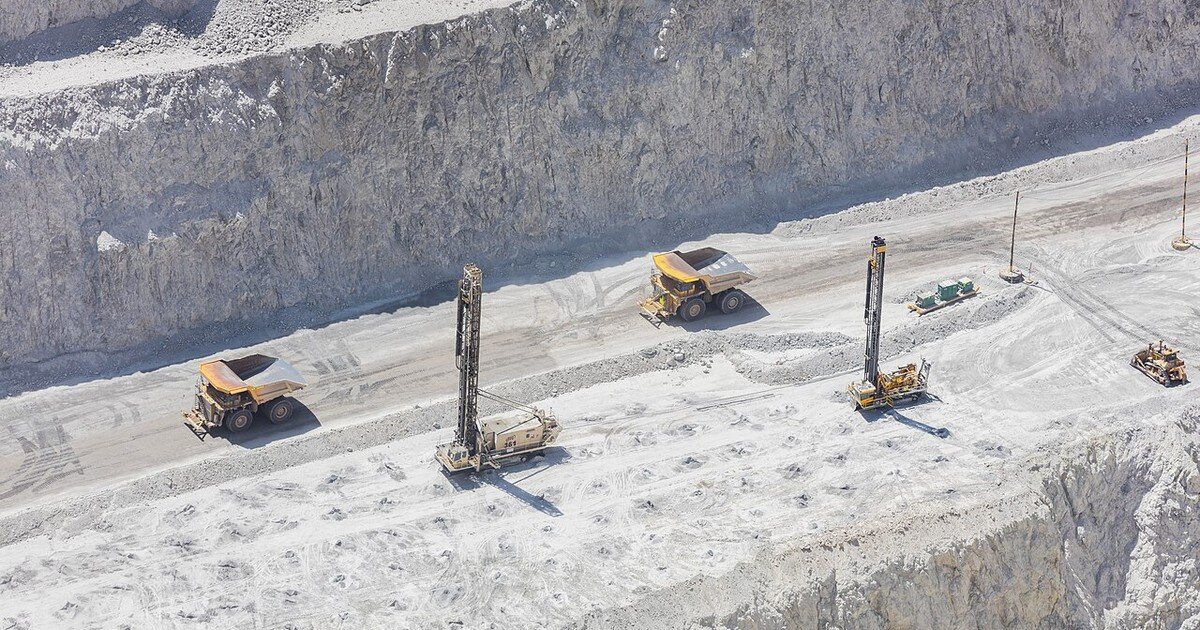
Hero photo by Diego Delso via Wikimedia Commons, licensed CC BY-SA 4.0, cropped.

This article is for educational and informational purposes only. It is not investment, tax, legal, or financial advice, and is not a recommendation to buy, sell, or hold any security. MarketPlays is not a registered investment adviser or broker-dealer. All investing carries risk, including the possible loss of principal; past performance does not guarantee future results. Figures, prices, and filings cited were accurate as of the publication date and may have changed since. You are solely responsible for your investment decisions. consider consulting a licensed financial professional before acting on anything you read here.
Last updated: 2026-11-14.
What do COPX holders actually own?
MarketPlays builds portfolios from the verified, combined holdings of real investors. See how names like COPX fit into diversified theme portfolios, then trade through your own broker.
Start Building Your Portfolio Browse portfolios without signing up →
Leave a comment