
Understanding the Costco Special Dividend
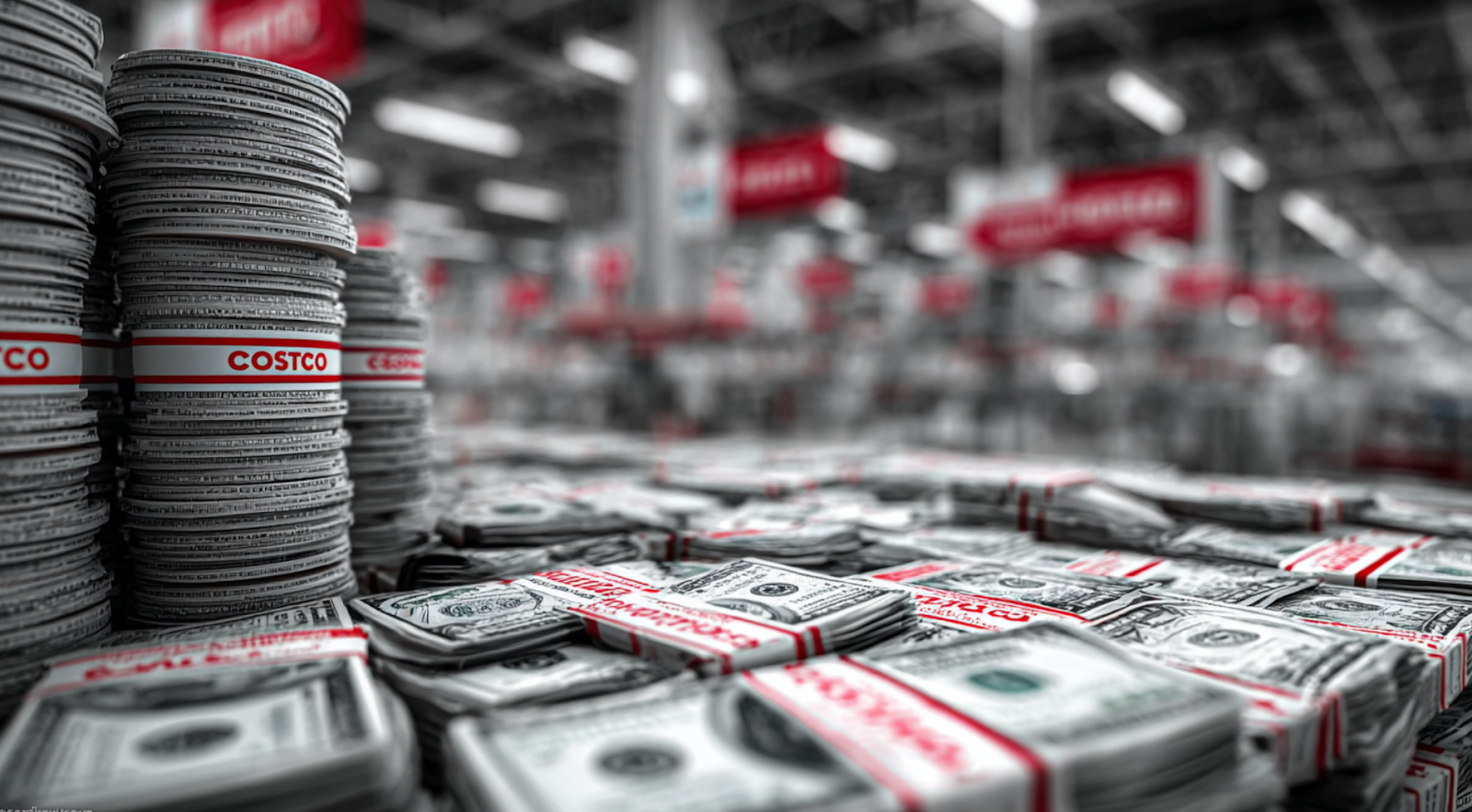
What is Costco's special dividend, and what makes it so special exactly? Why is it differnet from a normal dividend? Costco has issued a number of special dividends throughout the last decade for various reasons. Below, we break down why Costco has issued special dividends in the past and whether one is coming up in the future.
What is the Costco special dividend?
A special dividend is a one-time cash payout on top of the regular dividend. Costco's special dividend is issued when excess cash builds up or when management wants to share balance-sheet strength without permanently raising the recurring dividend. Costco's special dividends matter to investors, as they not only produce a return, but they also show that Costco is producing these special dividends from a position of strength.
They usually show up when the company is flush with cash and keeping its balance sheet steady. They highlight a business model that takes scale, squeezes efficiency, and turns it into money in the bank. For investors, they mark an event window with ex-dividend dates, option adjustments, and rebalancing opportunities that can be planned around.
When and how does Costco actually pay the dividend?
Special dividends generally work as follows. Shareholders who are on the books as of the record date receive the payment on the payable date. On the ex-dividend date, the stock begins trading without rights to that cash, so the price often "gaps" lower by roughly the dividend amount, which means that your total return (price change plus the cash received) is what really matters.
What do COST holders actually own?
MarketPlays builds portfolios from the verified, combined holdings of real investors.
Start Building Your PortfolioCostco's track record with specials
Costco has issued several specials in the past decade-plus. The pattern is pretty consistent, which allows us to build a relevant playbook. Below, we break down Costco's special dividend history.
| Year | Funding Notes | Context |
|---|---|---|
| 2012 | Cash + ready credit access | Healthy cash, conservative posture |
| 2015 | Cash plus modest borrowings | Returning surplus while funding growth |
| 2017 | Primarily borrowings | Flexible capital structure |
| 2020 | Existing cash | Cash conversion amid strong demand |
| 2023 | Largest to date | A signal of confidence in the flywheel |
Signals to watch before Costco issues a new special dividend
Special dividends aren't random and are typically a sign of strength. Costco tends to pull the trigger when cash generation is strong, growth is fully funded, leadership hints at "excess cash," and funding costs are friendly. If you track the four signals below, you'll know when the odds are improving, well before that SPECIAL DIVIDEND headline hits.
1) Balance sheet strength (Cash vs. near-term needs)
Special dividends usually start with the balance sheet. When Costco has cash piling up, short-term needs covered, and free cash flow well above everyday spending, it has room to reward shareholders without slowing growth. It's a bit like paying the mortgage and groceries with money left over for a bonus check. That surplus is what makes a one-time payout possible.
2) Capex runway
Expansion plans matter just as much. Costco is always building warehouses, improving logistics, and pushing into new markets. Management will not jeopardize that growth engine for the sake of a dividend. If operating cash comfortably funds those projects, then any extra can be shared with investors. That is when you can stay confident in the core position and start planning where the extra cash might go.
3) Management tone
Tone from management is another signal. When leaders talk about "returning excess cash" or reference prior special dividends, it is usually intentional. These comments hint at what the board is considering. If cash and capex are in good shape and the language turns more open, investors should sharpen their focus on timing.
4) Rate environment (Cost of flexibility)
Tone from management is another signal. When leaders talk about "returning excess cash" or reference prior special dividends, it is usually intentional. These comments hint at what the board is considering. If cash and capex are in good shape and the language turns more open, investors should sharpen their focus on timing.
Quick reference
| Signal | Why it matters | Investor read (green) | Action cue |
|---|---|---|---|
| Balance sheet | Surplus cash funds specials | Cash & FCF handily cover near-term needs | Plan where a lump sum will go |
| Capex runway | Growth stays funded | Expansion funded with cash to spare | Maintain core; prep redeployment |
| Management tone | Language foreshadows decisions | "Excess cash," "special dividends" referenced | Tighten timing; avoid chasing |
| Rates | Cheaper flexibility if needed | Stable/easing short-term rates; calm IG spreads | Expect more board flexibility |
Pro Tip
Treat a special dividend as a cash-handling moment, not a trading gimmick. Price often adjusts on the ex-date; your edge comes from knowing where every dollar will go before it hits your account.
Special dividend dates that matter
Special dividends reward investors who understand the calendar. Four dates decide everything: declaration, ex-dividend, record, and payable. Here's the investor-friendly version, with examples, pitfalls, and a quick planner you can paste into your process.
The four dates that matter (investor-first explainer)
Declaration date
This is when the board announces the dividend amount and schedule. It is the "game on" moment. From here, investors can map out position size, order types, whether to take the payout in cash or reinvest through DRIP, and how the incoming money will be used.
Ex-dividend date
The ex-date is the first trading day when new buyers do not get the dividend. If you buy on or after this day, you are out of luck. If you own the shares before the ex-date, you are entitled to the cash.
Record date
This is the company's snapshot of who qualifies for the payout. Under U.S. rules, it usually falls one business day after the ex-date.
Payable date
This is the day the money shows up in your account. The smart move is to decide in advance where it will go, whether that is adding to core positions, diversifying into something new, or simply parking in short-term bills.
Cheatsheet: Know your dates!
| Term | What it means | Investor action |
|---|---|---|
| Declaration | The company announces the amount and dates | Update trackers; confirm sizing, DRIP, and cash redeployment plan |
| Ex-Date | Stock trades without a dividend from this day | Must own before this date to qualify |
| Record | Company snapshot of eligible holders | Ensure trades settle in time (T+1); avoid last-minute orders |
| Payable | Cash hits your account | Redeploy per plan (core, diversifiers, or short-duration cash) |
How price action math works with the Costco special dividend
On the ex-dividend date, the stock typically opens down by roughly the dividend amount, because new buyers are no longer entitled to that payout. That "gap" looks jarring on a price-only chart, but your economic position is cash + shares. When you track total return (price plus the dividend added back from ex-date onward), the line is smoother. Day-to-day market moves can still push prices around for unrelated reasons, so don't expect a perfect one-to-one drop.
For Costco's most recent special, the ex-date was December 27, 2023, and the special dividend was $15 per share.
How to visualize it (investor view)
- Price-only series: daily closes across an 11-trading-day window (T-5 through T+5).
- Price-plus-dividend series: add the dividend amount to the ex-date and every post-ex date to approximate total return through the window.
Pro Tip
Skip "dividend capture." Between the ex-day adjustment, spreads, taxes, and slippage, the edge usually disappears. The smarter play: own the business you believe in and execute a clean plan for the incoming cash.
Special dividends and options (Read before you trade)
If you trade options on a regular basis and Costco is one of your favorites, then you need to pay attention. Special dividends can change the option math. Non-ordinary cash dividends frequently trigger contract adjustments in listed options, most commonly a strike price reduction equal to the dividend amount. The objective is to preserve economic equivalence for option holders.
| Tactic | What changes with a special dividend | Action checklist |
|---|---|---|
| Covered calls | Strike prices are often adjusted for non-ordinary cash dividends, so the usual "early assignment for dividend" dynamics differ from standard quarterlies. Deep ITM calls can still be assigned for reasons unrelated to the special. | Manage collateral and Greeks; model outcomes with adjusted strikes; be ready for assignment even if the dividend is "handled" via adjustment. |
| Protective puts / collars | Useful in an event sleeve to buffer downside through volatile windows around declaration/ex-date/payable. | Define put strikes/tenors and collar bands ahead of time; size for sleeve risk, not the whole core; monitor IV changes into the event. |
| Chain hygiene | After the special, listed options typically reflect adjusted strikes/deliverables; pre-event pricing logic may no longer apply. | On ex-date, confirm your broker's adjusted series before placing/rolling orders; rebuild watchlists; reprice spreads with updated strikes. |
FAQ
Does a special dividend change intrinsic value?
Not materially. Cash moves from the company to shareholders. Enterprise value adjusts, but long-term value still depends on unit economics, returns on capital, and growth execution.
How is cost basis affected?
A standard cash dividend doesn't change share count or per-share cost basis. Track cumulative dividends vs. invested capital for your own performance accounting. (Returns of capital are different—check statements each year.)
Do options always get adjusted for specials?
No, adjustments are common for non-ordinary cash dividends but are determined on a case-by-case. Most often, strikes are reduced by the dividend amount. Always confirm your chain shows the adjusted series before trading.
What do COST holders actually own?
MarketPlays builds portfolios from the verified, combined holdings of real investors. See how names like COST fit into diversified theme portfolios, then trade through your own broker.
Start Building Your Portfolio Browse portfolios without signing up →
Leave a comment