
Sectoral Investment: Slicing the Market by Industry
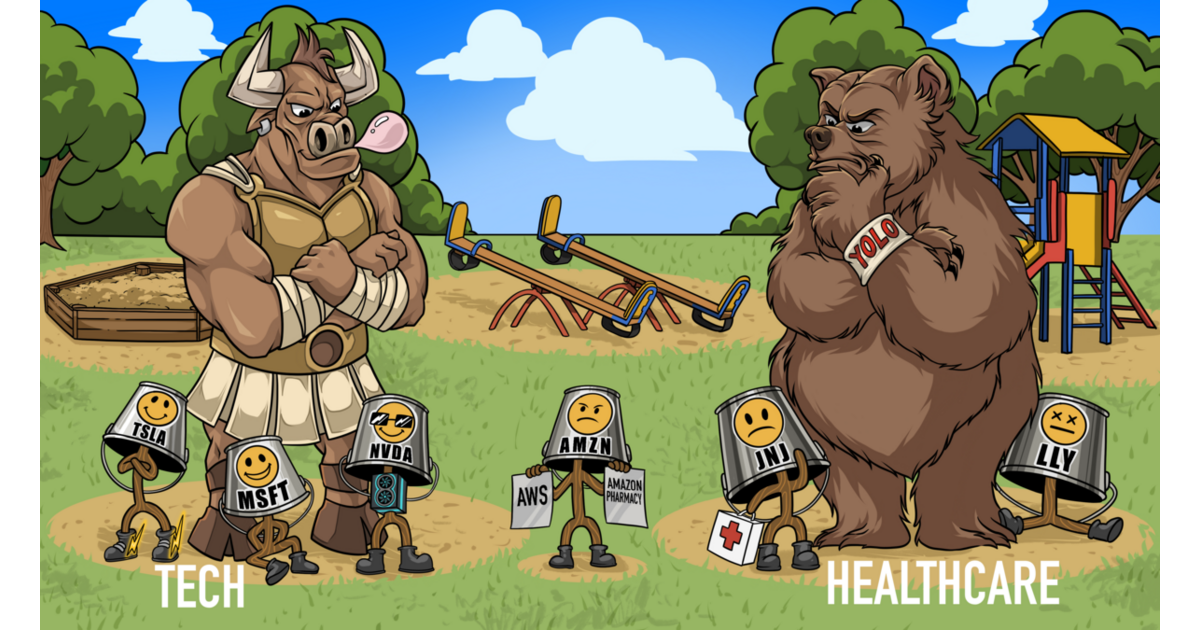
Sectoral Investment: Slicing the Market by Industry
The Federal Reserve's March 2026 G.17 release showed U.S. industrial production down 0.5% for the month, even as Q1 2026 still grew at a 2.4% annualized rate. Manufacturing told a similar story: down 0.1% in March, up 3.0% for the quarter. One slice of the economy was already cooling while another was still adding output. That mismatch, month to month and industry to industry, is the whole reason anyone bothers with sectoral investment in the first place.
If every corner of the economy moved together, owning the broad index would be the only sensible call. They don't. So here we are.
What sectoral investment actually means
Sectoral investment is a slightly fancy way of saying you've decided to own more of one slice of the economy than its weight in a broad index. You're not picking individual stocks. You're picking an industry bucket and tilting toward it.
The plumbing for this in U.S. markets is the Global Industry Classification Standard, which sorts public companies into 11 sectors: technology, health care, financials, energy, industrials, consumer staples, consumer discretionary, communication services, materials, real estate, and utilities. Most sector funds you'll run into are built directly on top of those buckets. State Street's own marketing for the well-known Select Sector lineup puts it plainly: their SPDR ETFs "give you wide access to diverse investment opportunities" across sectors, smart beta, and fixed income.
That's the whole machinery. You decide which buckets matter to you, you buy the bucket, you wait. Most of the appeal of sectoral investment lives in that simplicity.
Turn this theme into an actual portfolio
MarketPlays builds diversified theme portfolios from a broad ETF base plus the live holdings of investors in that theme.
Start Building Your PortfolioWhy investors bother slicing by industry
Three reasons people give for sectoral investment, roughly in order of how often you hear them.
The cycle reason. Sectors don't move in lockstep. Look back at the Fed's most recent G.17 print: industrial production fell 0.5% in March 2026 while still showing a 2.4% annualized gain for Q1. Underneath that headline, manufacturing was off 0.1% for the month but ran at 3.0% for the quarter. Numbers like those are the kind of thing a sector investor watches the way a baseball fan watches splits. You're trying to figure out which slice is leading the cycle and which one is rolling over.
The conviction reason. Some investors have a strong view about a particular industry, often because of where they work, what they read, or what they've watched up close for years. A sector tilt is a way to express that view without the single-name risk of betting the thesis on one company.
The personalization reason. The 11 GICS sectors are blunt instruments. They are also a reasonable starting kit for somebody who wants their portfolio to look a little less like the index and a little more like the things they actually care about, whether that's clean energy, semis, or community banks.
None of those reasons are the exclusive territory of professionals. Retail investors have used sector funds for years. The hard part isn't getting in. The hard part is sizing it.
Where sectoral investment quietly breaks
The case against owning sectors is rarely "it doesn't work." It's "it works less reliably than the marketing suggests."
A few honest problems worth naming.
Concentration creeps up on you. Most broad U.S. equity indexes already carry a heavy technology weight at the top. If you then go buy a tech sector fund on top of that, you aren't really diversifying into tech. You're doubling down on the position you already had.
Sector timing is hard for the same reason stock picking is hard. Knowing that energy outperformed last quarter tells you almost nothing about whether it will lead this one. Plenty of sector ETFs see big inflows right after a big run, and plenty of investors discover the dispersion problem only after they've bought.
Sectors aren't the only way to slice. A "tech tilt" expressed through a broad sector ETF looks very different from a tech tilt expressed through a thematic fund, which looks different again from picking three or four named tech stocks. The label is the same. The exposures aren't.
An illustrative example, not a recommendation. Imagine an investor who is certain U.S. health care is about to outperform because of demographics. If they express that view by buying a sector ETF, they ride the actual returns of the sector, whatever those turn out to be. If they express it by picking three biotech names, they ride the dispersion of those three names. Same thesis, very different ranges of outcomes. The point isn't which result is "better." The point is that the wrapper changes the bet.
Sizing a sectoral tilt without blowing up the core
Most of the time, sectoral investment is a topping, not the meal. The core portfolio is whatever broad, low-cost exposure you've already settled on. The sector tilt sits on top.
A few questions investors considering a tilt often ask themselves before sizing it:
- Is this view I have actually different from what the index already gives me, or am I about to pay extra fees for exposure I already own?
- If the sector trails the broad index by a meaningful amount for two or three years, am I going to abandon it at the bottom, or stick with the thesis?
- Am I doing this because I have a thesis, or because the sector is in the news this week?
None of those questions has a "right" answer. They're filters. The point of asking them is mostly to slow down the trade.
If the answer to the first question is "yes, my view really is different from my index exposure," then a small tilt, in qualitative terms a fraction of the portfolio rather than the bulk of it, is the usual shape. Sector exposures move around. The core, ideally, doesn't.
Writing the reversal condition down before you put the trade on is probably the single most useful habit here. Most people don't. The ones who do tend to hold their tilts longer than the ones who don't, because they have a rule for getting out instead of a feeling.
Where MarketPlays fits
If you want to see how other investors are grouping companies by industry, the tag index on MarketPlays is the cleanest place to start. Each tag page lists the symbols other investors cluster under that theme, along with what they've been saying about them. From there you can drill into a specific sector tag, like the technology tag, to see the constituents and recent discussion.
On your own hub, the portfolio is generated from two inputs: a crowd basket built from the themes you weight, and a standard ETF basket. The crowd-vs-ETF slider tunes the blend between them. That's the place where a sectoral investment tilt actually lives inside MarketPlays. You weight the themes you care about, the crowd basket reflects them, and the ETF side keeps the core honest.
Open a MarketPlays account and tune the crowd-vs-ETF blend on your own hub.
Key takeaways
- Sectoral investment is a tilt, not a strategy. It only earns its keep when your view is genuinely different from the index you already own.
- The 11 GICS sectors are the standard buckets, and ETFs like the SPDR Select Sector lineup are the most common wrappers for expressing a sector view.
- Headline numbers like the Fed's G.17 release (industrial production down 0.5% in March 2026, up 2.4% annualized for Q1) are evidence that sectors do diverge. They are not, on their own, a buy signal for any particular sector.
- Sector timing is hard. Most retail flows show up after the run, not before it.
- Size sectoral bets as a topping on a core portfolio, and write the reversal condition down before you put the trade on.
FAQ
What's the difference between sectoral investment and thematic investment?
Sectors are the 11 official GICS buckets, like financials or utilities. Themes are looser groupings that often cut across sectors, such as "clean energy" or "AI infrastructure." A sector ETF stays inside one bucket. A thematic ETF usually pulls names from several. The labels can sound similar in marketing copy. The actual holdings are not.
How big should a sector tilt be?
There isn't a single right number, and anyone who quotes one without naming a source is guessing. The shape investors most often describe is qualitative: a fraction of the portfolio, not the bulk of it. The core stays in broad, low-cost exposure. The tilt sits on top, sized so that being wrong about the sector doesn't unwind the rest of the plan.
Are sector ETFs a substitute for picking individual stocks?
They're a different bet, not a replacement. A sector ETF gives you the average outcome of the sector, minus fees. A handful of stocks gives you the dispersion of those particular stocks. If you have a view about an industry but no view about which company inside it wins, the ETF expresses that view more honestly than picking three names.
This article is for educational and informational purposes only. It is not investment, tax, legal, or financial advice, and is not a recommendation to buy, sell, or hold any security. MarketPlays is not a registered investment adviser or broker-dealer. All investing carries risk, including the possible loss of principal; past performance does not guarantee future results. Figures, prices, and filings cited were accurate as of the publication date and may have changed since. You are solely responsible for your investment decisions. consider consulting a licensed financial professional before acting on anything you read here.
Last updated: 2026-04-19.
Turn this theme into an actual portfolio
MarketPlays builds diversified theme portfolios from a broad ETF base plus the live holdings of investors in that theme. Pick your themes, set your blend, and trade through your own broker.
Start Building Your Portfolio Browse portfolios without signing up →
Leave a comment