
Investing in Space Stocks: What the Filings Actually Show
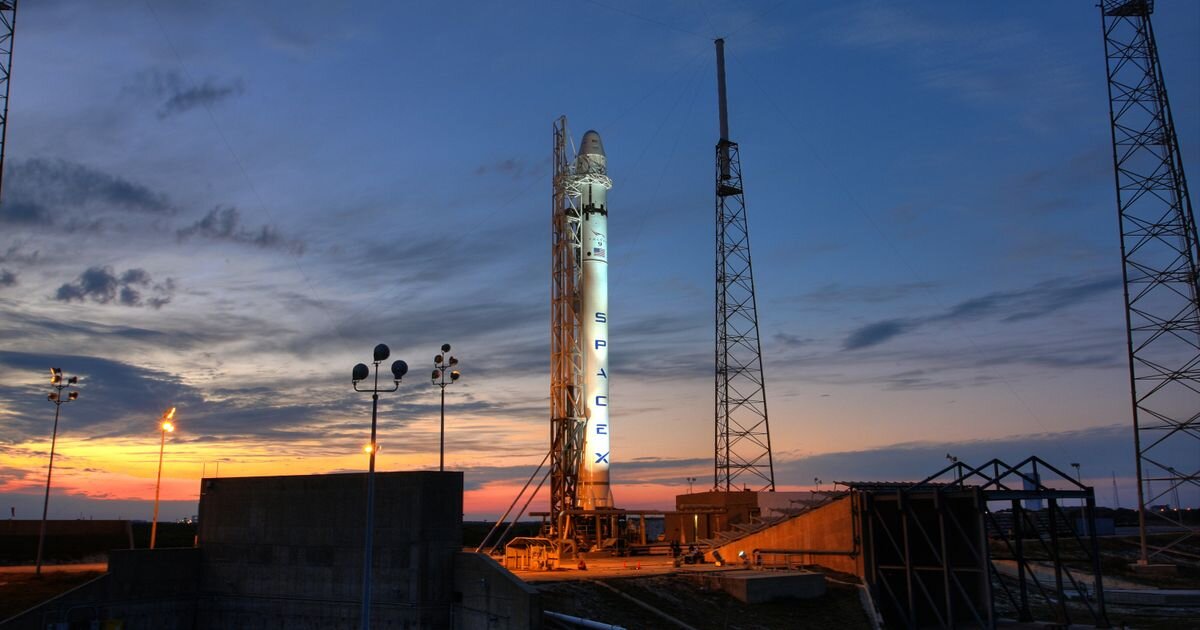
Rocket Lab (RKLB) finished 2025 with $602 million in revenue, up 38% year on year, according to the FY2025 results it filed with the SEC in February 2026. Numbers like that are the reason investing in space stocks stopped being a science-fiction hobby and started showing up in ordinary brokerage accounts.
The sector finally has companies that bill real customers every quarter. It also still has companies that mostly bill their own shareholders. The hard part is telling the two apart, because every space roundup lumps launch providers, satellite builders, lunar contractors, and defense primes into one theme, as if a rocket factory and a mapping-satellite operator were the same trade.
They are not. The filings sort it out better than the headlines do.
What actually counts as a space stock
The theme covers four loose buckets. Launch providers get paid to put things in orbit; Rocket Lab is the listed pure-play most people name first. Exploration contractors, like Intuitive Machines (LUNR), build landers and fly missions, mostly for government customers. Satellite operators and builders sell imagery, communications, and hardware. And the big defense and aerospace primes run space divisions that sit next to fighter jets and radar contracts.
The first two buckets are where the pure exposure lives. So does the volatility. The last bucket gives you space revenue diluted by everything else the company does, which is calmer and, for a thematic investor, less interesting.
Investors draw these lines differently, and that's fine. Browse the space tag on MarketPlays to see which symbols other investors group together.
Turn this theme into an actual portfolio
MarketPlays builds diversified theme portfolios from a broad ETF base plus the live holdings of investors in that theme.
Start Building Your PortfolioTwo filings worth reading before anything else
Two earnings releases, both filed as 8-K exhibits on SEC EDGAR, tell you most of what is actually knowable here. Both are short enough to read with your coffee.
Rocket Lab first. The company reported record quarterly revenue of $180 million in Q4 2025, which brought the full year to a record $602 million, up 38% from 2024 (Rocket Lab FY2025 results, SEC EDGAR). It guided Q1 2026 revenue to between $185 million and $200 million, which works out to roughly 57% year-on-year growth at the midpoint, based on the company's own guidance. You can follow the data and community research on its RKLB symbol page.
Intuitive Machines is the smaller, lumpier story. Its FY2024 earnings release shows $54.7 million of revenue in Q4 2024, up 79% year over year, and $228.0 million for the full year, nearly three times its 2023 revenue (Intuitive Machines FY2024 results, SEC EDGAR).
| Metric | Rocket Lab (RKLB) | Intuitive Machines (LUNR) |
|---|---|---|
| Latest full-year revenue | $602 million (FY2025) | $228.0 million (FY2024) |
| Revenue growth | Up 38% year on year | Nearly three times 2023 revenue |
| Backlog | $1.85 billion, up 73% | $328.3 million, up 22% |
| Source | FY2025 results, SEC EDGAR | FY2024 results, SEC EDGAR |
One caution about that table: the fiscal years differ. Rocket Lab's figures cover 2025; the Intuitive Machines numbers come from its FY2024 release, the most recent full-year filing in our sources. Growth rates from different years are not directly comparable. Treat the table as two snapshots, not a race.
Backlog: the number doing the heavy lifting
Revenue tells you what happened. Backlog tells you what customers have signed contracts for. Rocket Lab ended 2025 with $1.85 billion in backlog, up 73% year on year (FY2025 results). Intuitive Machines reported a record $328.3 million in backlog at the end of 2024, up 22% and the highest quarter-ending figure in its history (FY2024 results).
Those are the numbers that make the bull case. They are also the numbers most likely to be misread.
A backlog figure says nothing about when the work converts to cash, at what margin, or whether a government customer reshuffles the schedule. Historically, contract timing in this sector has been lumpy, so a big backlog deserves attention and skepticism in roughly equal measure.
For mission-based companies the distinction matters even more. A lunar contractor recognizes revenue around a handful of flights, so one delayed mission can move a whole year's results. The backlog is real. The calendar is the question.
Where the trade gets rough
Mission risk comes first. A launch failure or a hard landing can dominate a quarter, and with only a handful of missions per year, single events carry a weight that a software company never has to think about. The same concentration that makes the wins dramatic makes the losses dramatic too.
Customer concentration comes second. Much of the sector's contracted work traces back to government agencies, and budgets get rewritten. A theme that depends on public spending inherits the politics of public spending.
Third, the theme attracts companies with stories instead of customers. The two filings above are useful precisely because they are filings: audited-adjacent, dated, specific. Plenty of names in the space theme cannot show you a document like that yet.
None of this makes the theme uninvestable. It makes it a theme where reading the actual filings, rather than the press releases about the filings, earns its keep.
Sizing a theme like this
There is no sourced number I can hand you for the right allocation, and anyone who hands you one is making it up. The honest framing is qualitative: investors considering a theme like this often treat it as a small slice sitting on top of a boring, diversified core.
An illustrative example, not a recommendation: an investor, call her Maya, holds a broad index fund as her core. She wants space exposure, so she adds a small slice split between a launch name and an exploration name, knowing the second can swing on a single mission. She sizes the slice so that a bad year for the theme changes nothing about her retirement math. That last sentence is the whole discipline.
If you want to see what the theme looks like in practice, the Explore page on MarketPlays surfaces trending tickers and big movers across sectors. Open a MarketPlays account and set up your own hub portfolio in under two minutes.
Key takeaways
- Rocket Lab booked $602 million of revenue in 2025, up 38%, with a $1.85 billion backlog, up 73% (FY2025 results, SEC EDGAR).
- Intuitive Machines reached $228.0 million of revenue in 2024, nearly three times its 2023 figure, with a record $328.3 million backlog (FY2024 results, SEC EDGAR).
- Backlog is a forward signal, not booked cash. Conversion timing in this sector has historically been lumpy.
- Pure-play space names carry mission risk and government-customer concentration that diversified aerospace primes mostly dilute away.
- Sizing is qualitative: a small thematic slice on top of a diversified core, sized so a bad year changes nothing important.
FAQ
Are space stocks the same as aerospace and defense stocks?
They overlap, but they are not the same trade. The big defense primes run space divisions alongside everything else they sell, so their space exposure is diluted. Pure plays like launch providers and lunar contractors give direct exposure to the theme, with the higher volatility that comes with it.
How fast are space companies actually growing?
It depends entirely on the company. Rocket Lab grew revenue 38% in 2025 to $602 million, and Intuitive Machines nearly tripled its 2024 revenue to $228.0 million, both per their SEC-filed earnings releases. Other names in the theme have little or no revenue at all, which is why reading the filings matters.
How much of a portfolio do space stocks usually get?
There is no cited standard, and any precise percentage you see is invented. Investors considering the theme often treat it as a small slice on top of a diversified core, sized so that a bad year for the theme does not change their broader plan.
Turn this theme into an actual portfolio
MarketPlays builds diversified theme portfolios from a broad ETF base plus the live holdings of investors in that theme. Pick your themes, set your blend, and trade through your own broker.
Start Building Your Portfolio Browse portfolios without signing up →
Leave a comment