BLDPBallard Power Systems Inc.

Upcoming Earnings

We were not able to find an announced earnings date for this symbol yet. Check back again later

Company Info

CEO

R. Randall MacEwen

Location

N/A, N/A

Exchange

Nasdaq

Website

https://ballard.com

Summary

N/A

Company Info

CEO

R. Randall MacEwen

Location

N/A, N/A

Exchange

Nasdaq

Website

https://ballard.com

Summary

N/A

AI Insights for BLDP
3 min read

Quick Summary

Ballard Power Systems Inc. is a Canadian fuel-cell technology company focused on proton exchange membrane hydrogen fuel cells. The company develops and sells fuel-cell engines, modules, stacks, and related components used to generate electricity from hydrogen with water and heat as primary byproducts. Its main end markets include heavy-duty transportation, buses, trucks, rail, marine vessels, material handling, and stationary power applications. Ballard’s customers include vehicle manufacturers, transit bus makers, marine and rail integrators, industrial equipment companies, and energy infrastructure partners that want zero-emission power solutions. The company is still in a commercialization and scaling phase, with revenue growth and product shipments improving, but it remains unprofitable and dependent on continued adoption of hydrogen infrastructure.

The Bull Case

  • Ballard’s primary strength is its long-standing specialization in hydrogen fuel-cell technology for heavy-duty applications.
  • The company has experience serving transportation markets where batteries may face limitations related to charging time, payload, range, or continuous operation.
  • Recent news indicates that Ballard has a solid cash position, no bank debt, improving cost discipline, and a backlog that could support future revenue.
  • Its relationships with customers and partners in buses, marine applications, and other mobility segments provide a platform for scaling if hydrogen adoption accelerates.
  • The company also benefits from its position in a clean-energy theme that is supported by decarbonization goals, government incentives, and growing interest in zero-emission industrial power.

The Bear Case

  • Ballard’s biggest weakness is that it remains unprofitable, with negative EPS, negative net income, and negative operating income in the provided data.
  • Its earnings yield and price-to-earnings ratio are not meaningful because the company is losing money.
  • Revenue is still modest relative to its market capitalization, and the EV-to-revenue ratio shows that investors are paying for future growth rather than current profitability.
  • Gross profit remains thin, which means Ballard must improve manufacturing scale, pricing, product costs, and utilization to build a sustainable business model.
  • The company is also vulnerable to delays in hydrogen infrastructure, customer order timing, policy changes, and competition from both fuel-cell peers and battery-electric alternatives.

Key Risks

  • Ballard faces significant risks from continued losses, cash burn, and uncertainty about when or whether it can reach sustained profitability.
  • Hydrogen infrastructure remains underdeveloped in many markets, and high hydrogen production, storage, and distribution costs can slow customer adoption.
  • The company also faces technology competition from batteries, natural gas engines, diesel alternatives, and other fuel-cell providers with greater scale or stronger balance sheets.
  • Policy and subsidy risk is material because clean-energy economics can change quickly if governments reduce incentives or delay infrastructure programs.

What to Watch

UpcomingDuring the most recently referenced operating period, Ballard remained focused on expanding shipments, reducing costs, and improving margins while still reporting losses.
UpcomingThe provided fundamentals show operating revenue of about $89.4 million, gross profit of about $5.5 million, operating income of about negative $103.5 million, and net income of about negative $90.9 million.
UpcomingRecent news also cited 2025 revenue above $99 million, up 43%, and record shipments of nearly 800 engines representing more than 75 megawatts.
ExpectedIn the next quarter, investors are likely to watch whether Ballard can continue revenue growth while controlling operating expenses and cash burn.

Price Drivers

  • BLDP’s stock price is driven heavily by expectations for hydrogen adoption, clean-energy subsidies, and the pace of commercial fuel-cell deployment.
  • Recent revenue growth, record engine shipments, improving gross margin, and cost reductions are positive drivers because they suggest the business may be moving closer to scalable commercialization.
  • At the same time, the company has negative EPS, negative net income, negative operating income, and no dividend, so investors remain focused on cash burn and the path to profitability.
  • The stock also reacts to sector-wide momentum, including news about Plug Power, Bloom Energy, hydrogen policy, short interest, and investor appetite for speculative clean-energy names.

Recent News

  • Recent news about Ballard has been mixed, with some articles emphasizing improving operating metrics and others warning about weak fundamentals.
  • One report said Ballard generated 2025 revenue above $99 million, up 43%, and shipped nearly 800 engines representing more than 75 megawatts.
  • The same coverage highlighted improved gross margin, lower operating costs, reduced cash use, and a cash balance around $530 million, while still noting that the company is not consistently profitable.
  • Other commentary suggested the stock may appear undervalued versus a fair value estimate, but warned that declining revenue per share, negative EBITDA growth, and weak EPS trends could make it a value trap.

Market Trends

  • The broader hydrogen and fuel-cell market is being shaped by demand for clean energy, industrial decarbonization, zero-emission transportation, and reliable distributed power.
  • Hydrogen fuel cells are receiving attention from investors because they may solve problems that batteries cannot easily address in heavy-duty, long-range, high-utilization applications.
  • Data centers, electrification, and grid reliability concerns could create additional interest in stationary fuel-cell power and backup generation.
  • However, the sector remains highly speculative because hydrogen infrastructure is expensive, adoption timelines are uncertain, and many companies are still deeply unprofitable.

Community Research

Research from investors like you

Be the first to share your analysis on BLDP

Help fellow investors make informed decisions by sharing your research on fundamentals, catalysts, and outlook.

Topics: Company overview • Products • Competitors • Strengths & Risks

Symbol's posts

avatar
@General-Mils 8 months ago

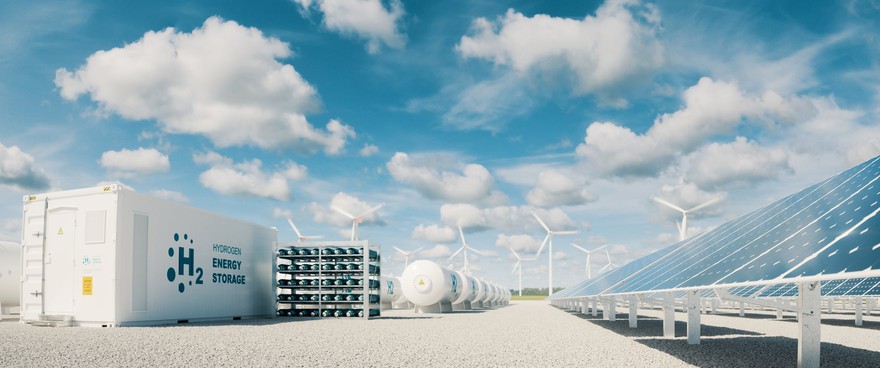
Quick rundown on Hydrogen stocks and recent company updates

Quick rundown on Hydrogen stocks and recent company updates
post thumbnail
avatar
@starcahier 8 months ago

Report forecasts electrolyzer market to reach $42 billion by 2034

Report forecasts electrolyzer market to reach $42 billion by 2034

post thumbnail
avatar
@IsabelLynn 9 months ago

Is the hydrogen-hype worth banking on?

Is the hydrogen-hype worth banking on?

Both Plug Power   and Ballard Power are trying to turn hydrogen hype into real revenue—but with Plug chasing vertical integration and Ballard sticking to its slow-and-steady heavy-duty niche, which one feels like the smarter long-shot bet for the next few years?

No more topics to show